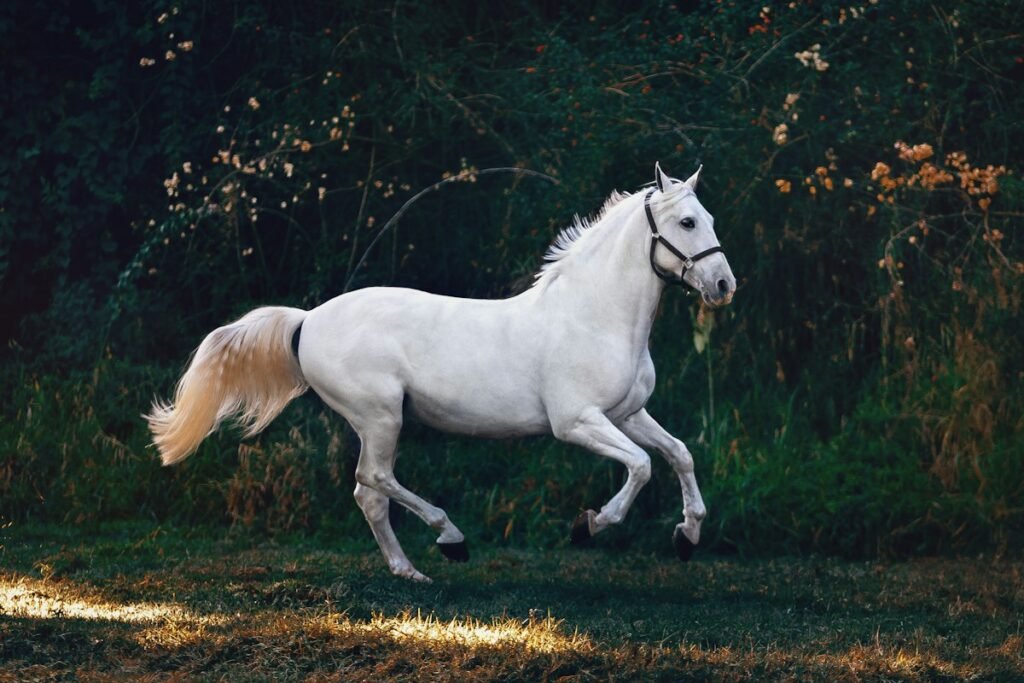
Quick answer: Ashwini is the first of the 27 Nakshatras, occupying 0°00′ to 13°20′ of sidereal Aries. Its ruling planet is Ketu, its symbol is a horse’s head, and its presiding deities are the Ashwini Kumaras, the twin horsemen of classical tradition. Placements here are read as quick-starting and restorative — and, in Vimshottari terms, a Moon in Ashwini means the life begins in a Ketu period.
The Basics
| Attribute | Ashwini |
|---|---|
| Position | First Nakshatra; 0°00′ – 13°20′ sidereal Aries |
| Ruling planet (Dasha lord) | Ketu |
| Sign ruler | Mars |
| Symbol | A horse’s head |
| Presiding deities | The Ashwini Kumaras, twin horsemen |
| Gana | Deva |
| Yoni (matching) | Horse, male |
| Nadi (matching) | Aadi (Vata) |
Why It Comes First
Ashwini begins at 0° Aries, the start of the sidereal zodiac, and much of how it is read follows from that position. The classical associations cluster around beginnings, speed and initiative — the qualities of something at the very start of a cycle rather than in the middle of one. The horse’s head reinforces it: forward motion, and a head already pointed somewhere.
The deity association adds the other theme. The Ashwini Kumaras appear in tradition as physicians and rescuers — arriving quickly, restoring what was damaged. Classical descriptions of Ashwini placements therefore combine haste with healing, which is a more interesting pair than either alone.
Traits as Classically Described
Read these as traditional characterisations, not findings about any individual:
- Quick to start. Initiative comes easily; the difficulty described is more often in finishing than in beginning.
- Restless with slow processes. Speed is the signature quality, and impatience is its cost.
- Drawn to helping and fixing. The physician association runs through most classical accounts.
- Independent. Ketu’s involvement is traditionally linked to detachment, which reads here as self-direction rather than withdrawal.
- Youthful in manner. A frequent classical note, tied to the position at the zodiac’s beginning.
The Four Padas
Each Nakshatra divides into four padas of 3°20′, each corresponding to a navamsa sign. The pada is what distinguishes two charts that both show the Moon in Ashwini:
| Pada | Span in Aries | Navamsa sign | Emphasis added |
|---|---|---|---|
| 1 | 0°00′ – 3°20′ | Aries | Most direct and physically driven; initiative doubled |
| 2 | 3°20′ – 6°40′ | Taurus | Speed tempered by an interest in tangible results |
| 3 | 6°40′ – 10°00′ | Gemini | Curiosity and communication; quickness expressed mentally |
| 4 | 10°00′ – 13°20′ | Cancer | The caretaking side of the healing theme comes forward |
This is why “Moon in Ashwini” on its own is a coarse description. A Moon at 1° Aries and a Moon at 12° Aries sit in the same Nakshatra and are read differently.
Career Themes
Classical career associations for Ashwini follow the two motifs. The healing thread points toward medicine, therapy, veterinary work and anything restorative. The speed thread points toward transport, logistics, emergency response, sport and work where a fast start is the whole value — and toward founding things rather than maintaining them.
An important qualification: Nakshatra alone does not indicate a career. The tenth house, its ruler, and the Dasha periods a person is actually living through carry far more weight in any serious reading. A Nakshatra theme that never appears anywhere else in the chart is a footnote, not a direction.
Compatibility: What Ashwini Contributes
In Guna Milan, the eight-fold matching system, several kootas are derived from the Nakshatras of both charts. Ashwini contributes a Deva gana, a male horse yoni, and Aadi nadi. Practically, the nadi value is the one to watch, because nadi carries the largest single share of the 36 points, and matches sharing the same nadi lose those points.
Two cautions that matter more than the scores. First, a guna total is one input among several, not a verdict — the seventh house, Venus, and the Dasha periods both people are in are all weighed in a real assessment. Second, a low score is a prompt for a closer look, not a conclusion about a relationship. The full mechanics are covered on our marriage compatibility page.
Ketu as Dasha Lord
The consequence with the longest reach is arithmetic, not symbolic. Because Ketu rules Ashwini, anyone born with the Moon in Ashwini starts life in a Ketu Mahadasha — a seven-year period — with the remaining portion set by the Moon’s exact degree. Every subsequent period follows from there in fixed Vimshottari order. Two people born the same day with Moons in adjacent Nakshatras can run on noticeably different timelines for decades. The mechanism is explained in what is a Dasha period in Vedic astrology, and Ashwini’s place in the full cycle is in the 27 Nakshatras explained.
One boundary to keep explicit: everything above is interpretation within a symbolic tradition. It is not a description of anyone’s character as fact, not a prediction, and not medical, legal or financial guidance.
Frequently Asked Questions
How do I know if I have Ashwini Nakshatra?
Usually it refers to the Moon’s Nakshatra. If your Moon falls between 0° and 13°20′ of sidereal Aries, it is in Ashwini — birth time matters, since the Moon can change Nakshatra within a day.
Is Ashwini considered a favourable Nakshatra?
Classical sources treat it positively, particularly for beginnings and for healing work. Favourability in a real reading depends on the whole chart, not on the Nakshatra’s reputation.
Does Ashwini rule out a match with another Ashwini?
No. Shared nadi costs points in Guna Milan, but matching is assessed across several factors and the score is one input rather than a decision.
Want your Nakshatra, pada and current Dasha read against the rest of your chart rather than in isolation? Order a birth chart analysis, or read the 27 Nakshatras explained first.